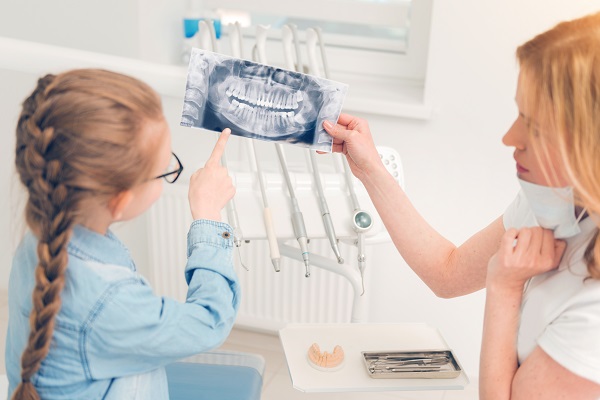
Pediatric dental x-rays are an essential tool used by dentists to monitor the development of children's teeth and look for symptoms of decay or other oral conditions. An x-ray can reveal cavities, and because children need regular cavity checks, occasional x-rays are an essential aspect of their dental treatment. Dental x-rays are among the safest types of radiography when appropriately used.
5 Common questions about pediatric dental x-rays
X-rays may be recommended as part of your child's complete treatment when they see the dentist. The following are answers to five of the most frequently asked questions about pediatric dental x-rays.
1. How often should a child's teeth be x-rayed?
Since each child is different, the requirement for dental x-rays differs as well. X-rays are suggested after a child's medical and dental histories have been reviewed and a clinical examination has been performed, and only when they are likely to provide details that cannot be gotten from visual exams alone.
Children, on average, require more x-rays than adults. Their mouths change and expand quickly. They are more prone to tooth decay than adults. The American Academy of Pediatric Dentistry suggests x-ray screenings every six months for children with high vulnerability to tooth decay to detect cavities forming between teeth. Children who have a minimal risk of dental decay generally need fewer x-ray scans.
2. If my child has never had a cavity, why are x-rays still necessary?
X-rays show more than cavities. For example, x-rays may be required to examine emerging teeth, identify bone diseases, evaluate injury impacts, or before orthodontic therapy. Dentists can use x-rays to diagnose and treat diseases that are not visible during an examination. Dental treatment is typically more tolerable and less expensive if dental issues are detected and addressed early.
3. Will my child need x-rays at every appointment?
No. X-rays are only used to examine and monitor a child's dental health when absolutely required. The frequency with which a child receives x-ray films is based on their specific situation. Request copies of x-ray films from the child's former dentist to be delivered to your new pediatric dentist to remove the need for further x-rays and decrease radiation exposure.
4. What are the risks of dental x-rays?
Pediatric dentists take extra precautions to ensure that their patients are not exposed to excessive amounts of radiation. The quantity of radiation received in a dental x-ray examination is quite low because of modern protections. Tooth x-rays, in reality, pose a significantly lower threat than undiagnosed and untreated dental problems.
5. What protections are in place to keep my child safe from x-rays?
Today's technology eliminates superfluous x-rays and confines the x-ray beam to the region of interest. To ensure the safety of the children undergoing treatment, the child will be given a lead apron to wear, which will reduce the effects of stray radiation even further. The child will be exposed to the least amount of radiation possible thanks to high-speed film, digital x-rays, and suitable shielding.
The bottom line
If you have additional questions about pediatric dental x-rays, contact our dental office today to book an appointment.
Request an appointment here: https://www.hvkidsmiles.com or call Hudson Valley Pediatric Dentistry at (845) 363-4177 for an appointment in our Middletown office.
Check out what others are saying about our dental services on Yelp: Pediatric Dentist in Middletown, NY.
Recent Posts
Kids dental crowns are a valuable investment in your child's oral health and smile's appearance. Whether they have received crowns to restore damaged teeth or for cosmetic reasons, it is important to properly care for them to ensure they last a long time. Here are some essential tips to help maintain the longevity and aesthetics…
Kids dental crowns can restore children's teeth that have been compromised by damage or decay. These restorations help maintain the appearance and function of primary and permanent teeth, providing essential protection as the child grows up. However, proper care and maintenance are necessary to ensure their longevity and effectiveness, as poor oral hygiene can lead…
Kids dental crowns are a versatile solution in pediatric dentistry. They help protect damaged teeth and support the replacement of missing ones, making them a reliable option for long-term oral health. They can also improve the appearance of the smile. Pediatric dentists recommend crowns to restore function, protect developing teeth, and ensure a healthy, lasting…
Pediatric dentists recommend kids dental crowns for children’s teeth. Veneers are a cosmetic treatment for adults, while dental crowns serve restorative purposes for both adults and children. Here is a closer look at the differences between these two treatments and why dental crowns are the appropriate choice for kids.Dental crowns and veneers are similar in…